01
Dripping taps and leaking mixers
A drip from the spout, a leak around the handle and water at the supply connection can involve different parts. The mixer design, wear and availability of compatible components determine the repair options.
Urgent Plumbing
Repairs & Maintenance
Geyser Services
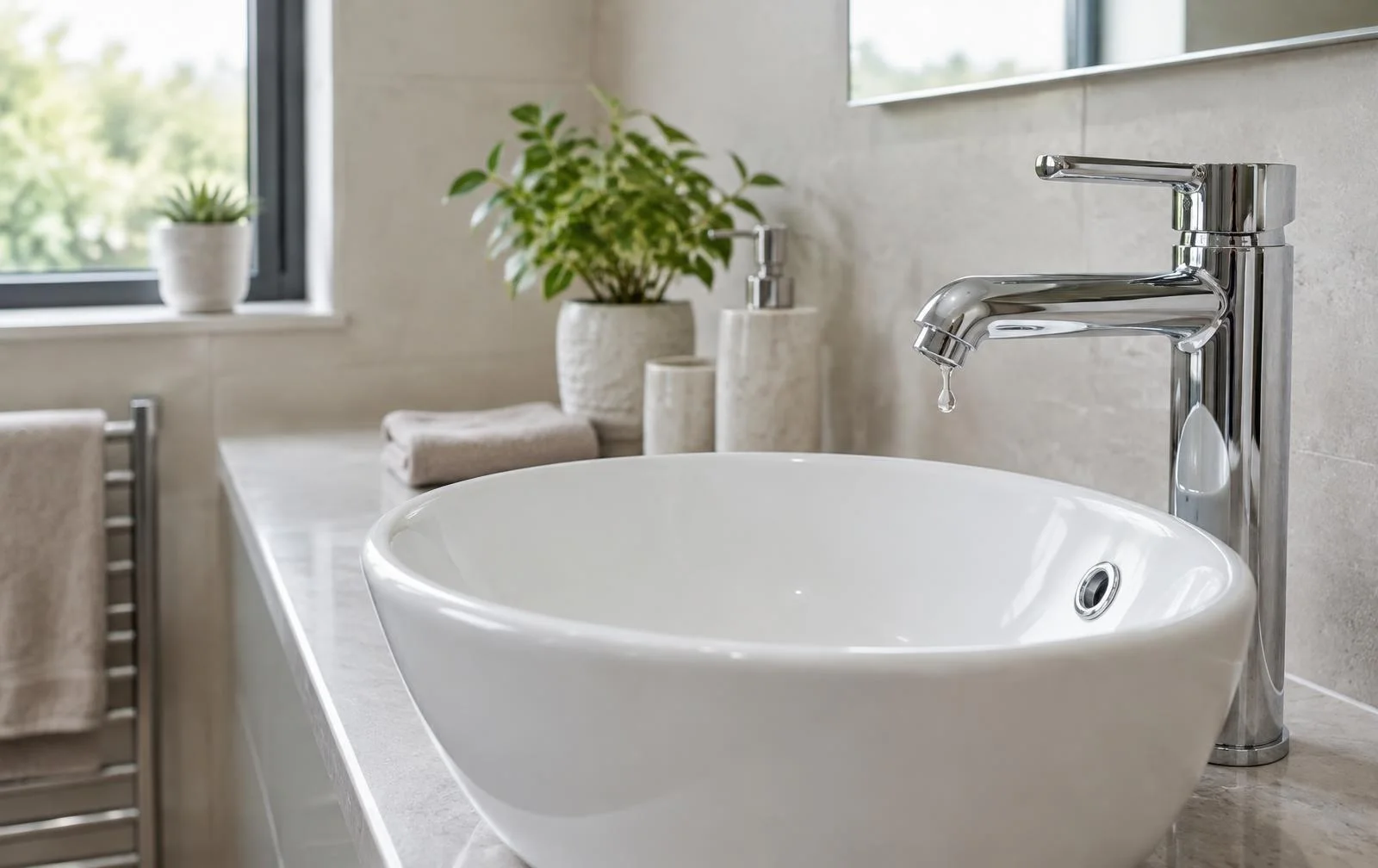
Understand the fault. Choose the right repair.
A dripping tap, running toilet or leaking connection deserves a clear explanation—not a guessed repair. The Cape Town Plumber (Pty) Ltd assesses domestic plumbing problems in Durbanville and explains the recommended work before you approve it.
Standard call-out & assessment: R450, payable before dispatch.
01Assess before recommending
02Written quotation
03Approval before additional work
01 — Domestic plumbing repairs
The right repair depends on the fault, component condition, accessibility and installation. Describe what you see and when it happens; the inspection establishes what work is appropriate.
01
A drip from the spout, a leak around the handle and water at the supply connection can involve different parts. The mixer design, wear and availability of compatible components determine the repair options.
02
A toilet that keeps filling, flushes poorly or leaks at a connection needs inspection of the relevant mechanism and water connections. Replacing a seal alone may not solve an incorrectly operating or deteriorated assembly.
03
Visible wet joints, faulty connectors and damaged exposed pipework can be assessed for repair or replacement. The condition of adjacent pipework and suitability of the fitting matter as much as the visible leak.
04
Leaks under a basin or sink may come from the supply, waste trap, seal or fixture. Noting whether the leak appears continuously or only during use helps guide the assessment without confirming a diagnosis.
05
Dripping outlets, mixer faults and leaking accessible connections can need different work. Moisture around a shower may instead involve drainage or waterproofing; plumbing work is not automatically the solution.
06
Stiff, leaking or poorly operating valves require assessment before a repair is chosen. Avoid forcing an old valve or dismantling a pressurised connection; isolation and access need to be considered.
07
A change at one outlet differs from a whole-property problem. Supply conditions, restrictions, valves, demand and leaks are possible causes. Repeated failures deserve investigation rather than an assumption that the same part needs replacing again.
08
Loose or deteriorated accessible plumbing components and other domestic defects can be discussed at assessment. Parts, safe access and the installation determine what can be completed; specialist work or a return visit may be needed.
An assessment does not promise that every repair can be completed on the first visit. Suitable parts, safe access, specialist requirements and the agreed scope may affect the next step.
02 — Proper diagnosis
Replacing a part without understanding the problem can leave the cause unresolved. Possible explanations guide the investigation; they are not confirmed diagnoses.
Report whether hot water, cold water, one fixture or the entire property is affected. A partly closed valve, restriction or supply issue can resemble a plumbing leak. Testing the affected part of the system helps avoid replacing a sound component.
Plumbing leaks, drainage faults, roof ingress, condensation and waterproofing problems may leave similar marks. Record when moisture appears and what was being used. A photograph can show the symptom but does not establish the source.
A damaged component, unsuitable connection or another installation issue may contribute to a leak. Assessing the surrounding installation helps define a repair that addresses the findings rather than just the visible drip.
Keep details of previous repairs and when the problem returns. Further investigation may be necessary before another component is replaced. Findings and uncertainties should be explained separately.
03 — Repair or replacement
A serviceable component may be repairable with a suitable part. A worn assembly, repeated failures or unavailable compatible parts may make replacement worth considering. Neither option is automatically the right answer.
The assessment considers the confirmed fault, surrounding installation, compatibility and the scope of each option. Access and labour can change the comparison; a small part does not necessarily mean a simple job.
Review the proposed solution and written quotation before deciding. Ask what is included, what remains uncertain and whether further access or work is needed. Repairs are not always cheaper, and replacement is not always better.
04 — Preventive maintenance
Simple observation helps you report a problem early. Maintenance advice is not a reason to dismantle fixtures or attempt unsafe plumbing or electrical work.
Arrange attention for dripping taps and small visible leaks; do not assume a slow leak is harmless.
Notice toilets that continue running after flushing or refill without being used, and report the pattern.
Look for moisture around accessible connections without removing covers, opening finishes or disturbing fittings.
Investigate repeated leaks or blockages instead of repeatedly treating the same symptom.
Know where the main water shut-off valve is, and keep safe access clear. Do not force a seized valve.
Seek professional help when the cause is unclear. Keep away from wet electrical equipment and do not attempt electrical repairs.
05 — Assessment to authorised work
Call or email with your suburb, the affected fixture and when the fault occurs. Mention active water escape and any electrical hazards.
Attendance depends on location and availability. The standard R450 call-out and assessment fee is payable before dispatch.
Accessible components and the relevant installation are assessed, where safe and practical. Further investigation may be needed if the source is concealed or intermittent.
Receive an explanation of the fault, remaining uncertainty, repair options and any recommended replacement or additional investigation.
Check the proposed work, parts, access requirements and costs. Clarify exclusions and whether a return visit or separately arranged work is needed.
Authorise the agreed scope before repair work proceeds. Additional work needs a revised quotation and your approval—not an assumption of consent.
The authorised work is completed and checked where practical. Any limitations, further work or follow-up observations are explained.
06 — Clear pricing
R450
Standard call-out and assessment fee, payable before dispatch.
The assessment fee is not automatically deducted from repair costs. It is separate from the proposed repair quotation; confirm the charges before authorising work.
Repair prices depend on the problem, required parts, access, labour and installation condition. A reliable repair price cannot be promised before there is enough information about the scope.
The proposed work and costs are explained in a written quotation. Additional work requires a revised quotation and your approval. Specialist investigation, additional access or work by another contractor is not automatically included.
07 — Durbanville and surrounding areas
Durbanville and genuinely served surrounding Northern Suburbs are the focus of this website, including Sonstraal, Kenridge and Eversdal. Share your suburb when booking; attendance depends on location and scheduling, not a promised arrival time.
For estates or properties with shared services, mention access arrangements, who can authorise work and whether the affected supply is private or shared. Identifying the relevant shut-off point and access requirements helps plan the assessment without assuming how your property is plumbed.
Durbanville service information →08 — Repairs and maintenance FAQ
Understand the assessment, repair options and costs without assuming a result before inspection.
Domestic taps, mixers, toilet cisterns, accessible pipes, connections, valves and basin, sink, bath or shower plumbing can be assessed. Low pressure and recurring faults may also need investigation. The appropriate work depends on the installation, safe access, component condition and available parts; specialist work is not automatically included.
Some faults can be addressed with a suitable seal, cartridge or cistern component. Others involve deterioration, incompatible parts or a wider installation issue. Inspection helps establish whether repair is feasible or replacement is worth considering. Neither option should be assumed before the fault and condition are understood.
Water may pass into the pan through a poorly sealing flush mechanism, or the filling system may fail to stop at the correct level. Wear, debris and adjustment problems are possibilities—not a diagnosis. Report whether it runs continuously, refills intermittently or leaks externally so the relevant parts can be assessed.
Possible causes include supply conditions, simultaneous water use, partly closed valves, restrictions and leaks. A problem at one outlet may differ from a change throughout the property. Note whether hot or cold water is affected and when the pressure changes. Do not assume a pipe leak or adjust safety devices without assessment.
Consider the confirmed fault, overall condition, repeated failures, compatibility and availability of suitable parts. The scope and cost of each option should be explained. Replacement is not always better, and a repair is not always cheaper once access and repeated work are considered. Approve the chosen option after reviewing the quotation.
The quotation follows assessment of the fault and proposed scope. Parts, access, labour, installation condition and any further investigation affect the cost. Review the written quotation and exclusions before approval. If additional work becomes necessary, a revised quotation and approval are required before that work proceeds.
Yes. The standard call-out and assessment fee is R450, payable before dispatch. It is not automatically deducted from repair costs. The proposed repair is quoted according to the findings and scope; clarify the assessment and repair charges before authorising additional work.
If safe and practical, isolate the relevant water supply and protect belongings. Keep away from wet electrical fittings, wiring and standing water near electrical equipment. Do not touch wet equipment, cross water to reach a switch or dismantle plumbing to locate the source. Call for active water escape and describe the situation.
Yes, recurrence can justify a closer look at surrounding components, supply conditions or the installation. It does not prove a particular underlying fault. Keep a record of timing and previous work. Further investigation may be needed before another repair is recommended, particularly where symptoms are intermittent or access is limited.
Call 079 291 7407 or email info@thecapetownplumber.co.za with your suburb, symptoms and any useful photographs taken safely. Attendance is arranged subject to location and availability, with the standard R450 assessment fee payable before dispatch. Call rather than wait for an email response if water is actively escaping.
09 — Related service guidance
For a burst pipe or major leak, keep away from hazards and call. Read the safe first steps while arranging assistance.
Emergency plumbing →Unexplained consumption or persistent dampness may need a separate investigation before repair can be defined.
Leak detection and repairs →A drainage blockage needs different assessment from a cistern mechanism or water-supply fault.
Blocked drains and toilets →No hot water, geyser leaks and replacement decisions involve their own safety precautions and scope.
Geyser repairs and replacement →10 — Contact the team
Contact The Cape Town Plumber (Pty) Ltd for an assessment. Describe the fixture, symptoms and your suburb; use a call for active water escape rather than waiting for an email reply.
info@thecapetownplumber.co.zaThe proposed scope is explained before additional work begins. Ask about parts, access, exclusions and any follow-up needed so you can make an informed decision.
Leave a Google review →All business contact options