No hot water
A heating element, thermostat, electrical supply, control or another component may be involved. The symptom alone does not identify the fault.
Urgent Plumbing
Repairs & Maintenance
Geyser Services
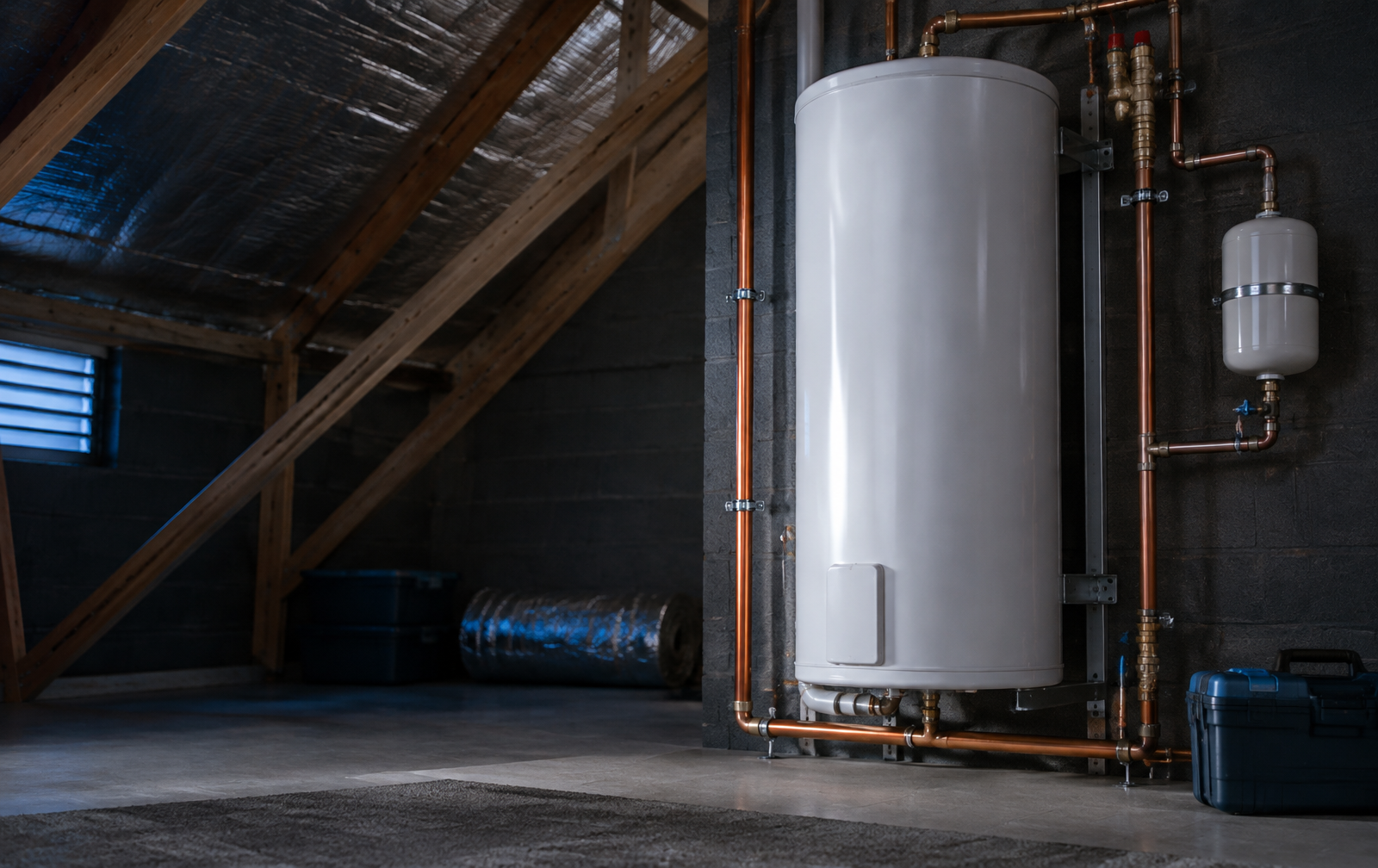
No hot water, a leak or a failed component does not always mean the geyser must be replaced. We assess the fault, explain the practical options and define the proposed work before you approve it.
Describe the symptom
Tell us what changed and whether water is escaping.
Assess the cause
The visible symptom may have more than one cause.
Approve the scope
Repair or replacement work is explained first.
01 — Common symptoms
A symptom points to a problem, not necessarily its cause. Assessment avoids replacing parts on assumption.
A heating element, thermostat, electrical supply, control or another component may be involved. The symptom alone does not identify the fault.
Water may come from the vessel, a connection, valve, overflow pipe or nearby plumbing. The source and rate of the leak need to be established.
Failed heating components can affect temperature or stop the geyser heating. Electrical testing must be handled by an appropriately skilled person.
A dripping or discharging valve can indicate a valve fault, pressure condition or normal operation in some circumstances. It should not be blocked or tampered with.
Incorrect or changing pressure can affect valves, connections and the wider installation. Assessment should consider the system, not only one visible symptom.
Corrosion, damaged fittings, worn seals or an ageing vessel may change what can be repaired safely and economically.
02 — Geyser repairs
A repair starts by checking the reported symptom, accessible plumbing, relevant safety components and the condition of the geyser. The likely cause and available repair options can then be explained before work proceeds.
Elements, thermostats, valves, seals and connections can fail, but similar symptoms can arise for different reasons. A component is replaced only when the assessment and approved scope support it.
03 — Geyser replacement
Replacement involves assessing the existing installation, selecting a suitable unit, planning safe access and removal, and identifying the pipework and safety components the installation requires.
The approved work may include removal, installation, required components, connection changes and testing. Applicable compliance documentation depends on the completed work and the condition of the relevant installation; it is not automatic before assessment.
04 — Geyser safety
If water is coming through a ceiling or appears near electrical equipment, keep people clear and arrange professional help. Do not enter a wet area to reach a switch or valve.
Emergency plumbing guidance →Keep clear of water near lights, plug points, wiring, appliances or the distribution board.
Switch off the relevant water or electrical supply only when it can be reached without entering a wet or unsafe area.
Do not open electrical covers or the geyser casing, and do not attempt electrical testing yourself.
Never block, cap, adjust or tamper with an overflow or pressure-relief device.
If water is entering a ceiling, stay away from sagging or damaged areas and move belongings only when safe.
Call and explain where the water is visible, whether it is still flowing and whether any supply was safely isolated.
05 — Repair or replace?
Replacement is not automatically better, and repair is not always safe or economical. The decision should follow an assessment of the whole relevant installation.
06 — Service process
A reliable recommendation or price may require access to the geyser and connected installation.
Tell us what you have noticed, where the geyser is located and whether water is still escaping.
The geyser, connected plumbing and accessible safety components are assessed to identify the likely source of the problem.
We explain what was found and whether a repair, further investigation or replacement may be appropriate.
The proposed scope and relevant costs are set out for consideration where the work can be defined.
Work proceeds only after the proposed scope has been authorised.
The approved repair or replacement is completed using the parts and access the installation requires.
The completed work is tested where applicable, and relevant follow-up or documentation is explained.
07 — Pricing and scope
One price cannot responsibly cover every geyser repair or replacement. The fault, access and approved scope determine the work.
Where the work can be defined, the findings and proposed scope are set out in a written quotation for approval. Hidden conditions can require the scope to be reconsidered and explained.
08 — Durbanville service
Geyser assessment, repair and replacement are available to customers in Durbanville and genuinely served surrounding Northern Suburbs, subject to location and scheduling.
This includes Durbanville, Sonstraal, Sonstraal Heights, Aurora, Vierlanden, Kenridge, Eversdal, Pinehurst and Uitzicht. Call with your suburb and the location of the geyser so availability and access can be discussed.
Explore Durbanville plumbing →Useful information for the first call
09 — Geyser FAQ
If water is escaping now or there may be an electrical hazard, call rather than waiting for an email reply.
079 291 7407No hot water can result from several different faults, including a failed heating element or thermostat, an electrical supply problem, a control issue or another component in the system. Checking only the most obvious part can miss the actual cause. A proper assessment should consider the symptoms, the geyser and the relevant electrical and plumbing components before a repair is recommended.
Keep clear of water near electrical fittings or the distribution board. If the water and electrical supplies can be isolated without entering a wet or unsafe area, switch them off; otherwise, do not take the risk. Move belongings only when safe, note where the water is appearing and arrange professional assistance. Do not block an overflow, adjust a pressure-relief valve or open the geyser casing.
A faulty element can often be replaced when testing confirms that it is the cause and the geyser and installation remain suitable for repair. Access, the condition of the vessel and related components, and any other faults all affect the scope. Electrical work must be handled appropriately. The element should not be replaced on assumption when another fault could be responsible for the same symptom.
Replacement may be appropriate when the vessel itself has failed, deterioration is extensive, a safe repair is not feasible, or the likely repair cost is poor value compared with a suitable replacement. Age is one factor, not an automatic reason to replace a working unit. The condition of the installation, source of the fault, safety considerations and available repair options should be assessed together.
Pricing depends on the suitable geyser, installation location and access, removal of the existing unit, pipework changes, safety components, materials, labour, testing and any work needed to bring the relevant installation into an acceptable condition. Because those details differ by property, a fixed online figure can be misleading. The scope should be assessed and explained in a written quotation before authorised work begins.
Applicable documentation depends on the work completed and whether the relevant installation meets the required conditions. It should not be promised before the existing geyser and connected installation have been assessed. Where documentation applies, the requirements and any work needed to satisfy them should be explained as part of the proposed scope rather than treated as automatic for every repair.
Attendance depends on the property location, the nature of the problem and current scheduling. Call with your Durbanville suburb, a clear description of the symptoms, whether water is still escaping and where the geyser is located. That information helps determine the appropriate next step. No fixed arrival time should be assumed until availability has been confirmed directly with you.
10 — Related plumbing
A substantial geyser leak, uncontrolled water or water reaching electrical equipment may need prompt attention rather than a normal appointment.
Emergency plumbing in Durbanville →Verifiable business details
Need a geyser assessment?
Call to discuss the problem, or email info@thecapetownplumber.co.za with non-urgent details.