Visible pipes and connections
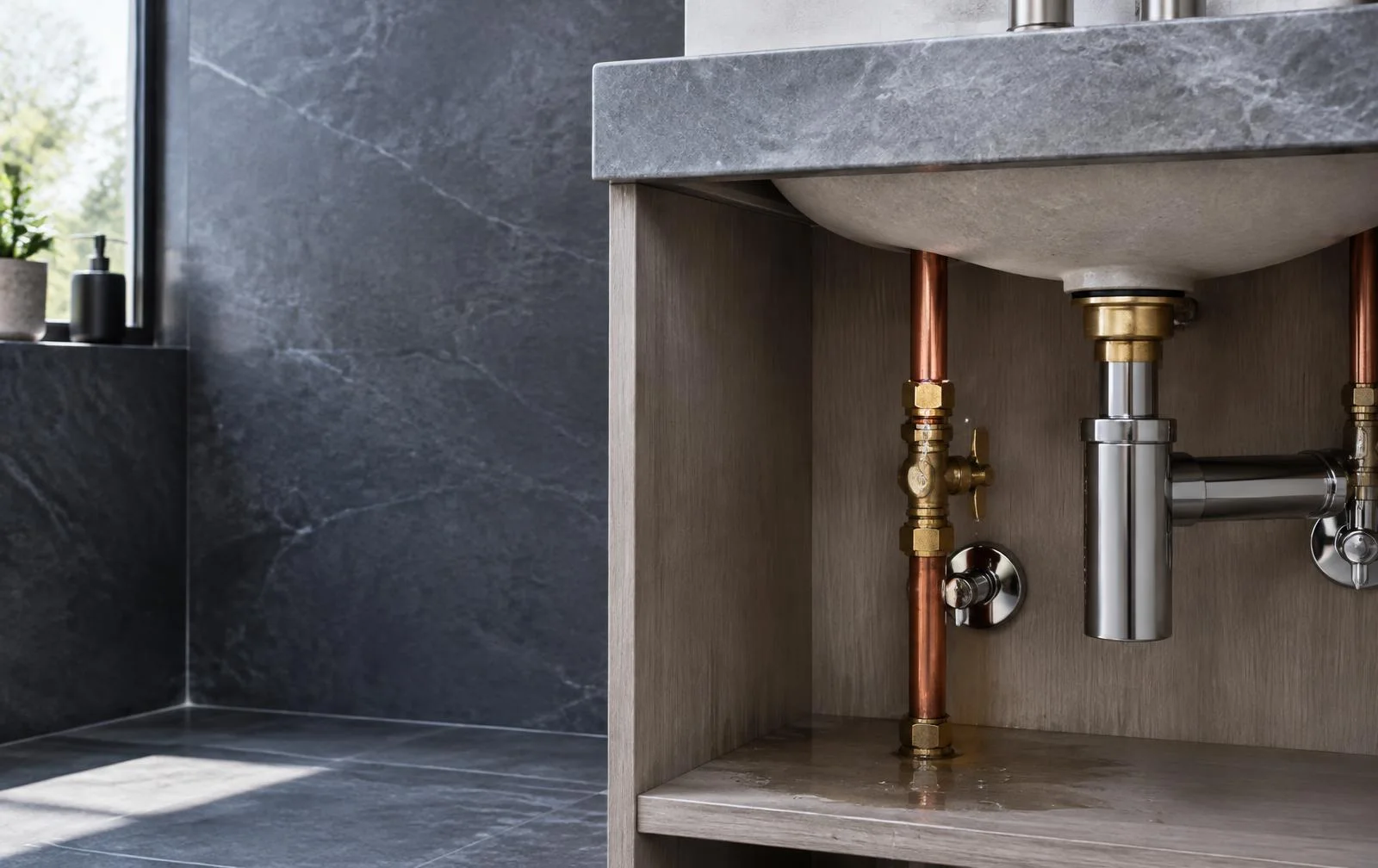
Drips, wet joints or escaping water from exposed supply pipework can often be inspected directly. The failed component and surrounding condition still need assessment.
Urgent Plumbing
Repairs & Maintenance
Geyser Services
Investigate the source. Then plan the repair.
A damp wall, unexplained water use or a leaking connection needs more than a guess. The Cape Town Plumber (Pty) Ltd starts by assessing the symptoms and deciding how best to investigate the suspected leak.
Standard call-out & assessment: R450, payable before dispatch.
01Signs are clues, not proof
02Investigation and repair differ
03Approve additional work first
01 — Types of leaks
Supply water, wastewater and moisture entering the building do not follow the same assessment path. Start with what is visible and when it happens.
Drips, wet joints or escaping water from exposed supply pipework can often be inspected directly. The failed component and surrounding condition still need assessment.
A dripping outlet differs from water escaping around a valve, mixer body or connection. The source determines whether a component repair or replacement is appropriate.
Moisture may come from a supply connection, waste trap, seal or the fixture itself. When it appears during use can help distinguish a supply leak from a drainage leak.
Water may escape externally at a connection or pass silently into the pan through a cistern fault. Both can contribute to unexplained consumption.
Leaks can involve connections, valves or associated pipework rather than the geyser cylinder itself. Hot water and nearby electrical equipment need particular caution.
A suspected pipe leak within a wall, floor or other building area requires an evidence-led investigation. Accessible areas are inspected first; additional access may be needed.
A wet patch is not automatically a supply-pipe leak. Roof leaks, rainwater ingress, condensation, waterproofing issues and drainage leaks may need a different investigation.
Repeated moisture near a previous repair warrants a fresh assessment. Another connection, a separate source or a broader pipework problem may be involved.
02 — Warning signs
These signs can justify an assessment. None guarantees a hidden pipe leak, and no investigation can promise that finishes will never need opening.
03 — What to do now
Active water escape or moisture near electricity needs prompt assistance. Do not put yourself at risk to reach a valve or protect a possession.
Emergency plumbing guidance →If water is actively escaping, shut off the relevant water supply only if it is safe and practical to reach and operate the valve.
Keep away from wet electrical fittings, exposed wiring and electrical equipment. Do not touch wet equipment or reach a switch through standing water; seek appropriate assistance.
Move belongings out of the water only where you can do so safely. Keep clear of bulging ceilings, loose finishes or visibly unstable materials.
Do not break walls, lift flooring or open electrical equipment to search for the source. Have the likely leak assessed before invasive work.
Record when the problem began, where moisture appears and whether it follows rain, hot-water use or use of a particular fixture. Take photographs from a safe position.
If suitable and safe, observe whether the water meter registers when all water use has stopped. Do not tamper with the meter or utility equipment.
04 — Professional investigation
Property layout, pipe routes, accessibility, symptoms and available equipment influence the approach. No single method locates every leak, and a precise detection time cannot be promised.
Describe the timing, affected area, consumption changes and any previous repairs. A photograph helps explain the symptom but cannot establish the cause on its own.
Visible pipes, fixtures and accessible connections are checked first, where safe and practical.
The property layout, supply arrangement and symptoms help narrow the likely sources. Uncertainties are kept separate from confirmed findings.
Additional checks or specialist detection may be appropriate. Methods depend on the pipe layout, access and actual equipment and service availability.
Discuss what has been established, what remains uncertain and the proposed next step, including any access that may be required.
Investigation, repair and any separately arranged specialist work may have different scopes and costs. These are explained before proceeding.
Repairs or additional work proceed only after the proposed scope and quotation have been approved.
Test the repaired plumbing where practical and explain the result, remaining limitations and any recommended follow-up.
05 — Detection versus repair
The aim is to assess the likely source, evidence and access needed. A first assessment may identify an accessible fault or show why further investigation is necessary. Specialist detection is considered only where appropriate and subject to actual service and equipment availability.
Work may involve pipework, fittings, valves or other plumbing components. Concealed leaks may require additional access. Painting, plastering, tiling and other building reinstatement are not assumed to be included; an appropriate contractor may be needed. Confirm the boundaries of the quotation before approval.
06 — Walls, floors and ceilings
Water can travel along building materials and pipe routes before it becomes visible. A photograph records the symptom, not a confirmed leak location.
A damp surface may be displaced from the leak by water travelling through a slab, joint or wall. Avoid choosing an opening point from the stain alone.
Water can originate from pipework, a geyser installation, the roof or another source above. Stay clear of sagging ceilings and wet electrical fittings; active water escape needs prompt assistance.
Supply connections, waste plumbing, fixture seals and waterproofing may produce similar visible symptoms. Note whether moisture appears only when a fixture is used.
Record links to rain, appliance cycles, hot-water use or time of day. A dry inspection does not necessarily rule out an intermittent fault.
07 — Water meter guidance
Only make this observation where the meter is safely accessible and you understand which supply it serves. It can indicate water use or possible leakage, but cannot identify a location or prove the exact cause.
Ensure taps, appliances and other water use are stopped. Toilets, irrigation and automatic filling systems may continue drawing water unnoticed.
Where appropriate, record the reading and whether it continues registering flow. Observe only—do not remove seals, operate utility equipment or alter the meter.
Storage tanks, shared supplies and automatic systems complicate interpretation. A stationary meter does not rule out drainage leaks, other moisture sources or an intermittent supply leak.
08 — Pricing and booking
Investigation and repair costs depend on the findings, access and work required. Specialist leak detection may involve separate charges where applicable; the scope and any additional cost must be quoted for approval first.
Standard call-out & assessment
R450
payable before dispatch
Not automatically deducted from repairs. Not a fixed price for a complete leak investigation or repair. Additional work is explained, quoted and approved before proceeding.
Arrange an assessment09 — Durbanville service
The Cape Town Plumber (Pty) Ltd serves Durbanville and surrounding Northern Suburbs including Sonstraal, Kenridge, Eversdal, Aurora, Vierlanden and Pinehurst. Attendance depends on your location and current scheduling; call to confirm arrangements.
Durbanville plumbing services →10 — Leak assessment FAQ
An assessment should explain uncertainty as clearly as confirmed findings. Insurance requirements and specialist service availability need checking for your situation.
Unexplained consumption, persistent dampness, damaged finishes or a meter registering with water use stopped can justify an investigation. None proves a concealed pipe leak on its own. Record the timing and affected areas, and arrange an assessment that considers plumbing and other possible moisture sources.
A toilet cistern, appliance, irrigation system or storage tank may still be using water. Shared supplies and automatic systems can complicate the observation. Where all use is genuinely stopped and the meter serves only that supply, continued registration may suggest leakage. It does not locate a leak or prove its exact cause.
Sometimes accessible checks provide enough evidence to locate a likely source. Other cases need additional investigation or access through a finish. No non-invasive result is guaranteed. Any proposed opening or specialist investigation should be explained and quoted for approval before it proceeds.
Investigation and repair can be separate tasks. An assessment may identify a fitting that can be repaired, or indicate that more investigation and access are needed. Confirm the quotation's scope before approving work. Painting, plastering, tiling and other reinstatement are not assumed to be included and may require an appropriate contractor.
Keep clear of the wet area, sagging finishes and electrical fittings. If safe and practical, isolate the relevant water supply. Do not touch wet electrical equipment or cross standing water to reach a switch. Seek prompt professional assistance; water could come from a geyser, pipework, roof or another source, so a photograph alone is not a diagnosis.
Yes. Roof leaks, rainwater ingress, condensation and waterproofing problems can cause dampness, as can drainage leaks. Water can travel through building materials before appearing on a wall. An assessment should consider these alternatives rather than assuming that every stain is a leaking supply pipe.
The standard call-out and assessment fee is R450, payable before dispatch. It is not automatically deducted from repairs. Further investigation and repair costs depend on access, the findings and the work required. Specialist leak detection may carry separate charges where applicable. Additional work must be quoted for approval before proceeding.
Requirements differ by insurer and policy. Ask your insurer what information or documentation it needs before authorising non-urgent work. Tell the plumbing team about any requested report so its availability, scope and any cost can be discussed. Insurance acceptance, reimbursement and coverage cannot be promised.
There is no single reliable duration for every property. Access, pipe layout, whether the leak is active and the available evidence affect the investigation. An accessible connection may be straightforward to assess; a concealed or intermittent leak may need further checks or a separate visit. Timing and limitations are discussed as the evidence develops.
A leak can reduce pressure, but it is not the only explanation. Supply conditions, partly closed valves, restrictions and other water use can produce similar symptoms. Report whether the change affects hot water, cold water, one fixture or the whole property so the investigation can consider the right part of the system.
Call 079 291 7407 or email info@thecapetownplumber.co.za with your suburb, the symptoms and when they began. Current attendance depends on location and scheduling. The standard R450 call-out and assessment fee is payable before dispatch. If water is actively escaping or near electrical hazards, call rather than waiting for an email response.
11 — Related plumbing guidance
Cylinder faults, valve issues and connected hot-water pipework need their own assessment.
Geyser repairs and replacement →Overflowing wastewater and several slow fixtures suggest a drainage issue rather than a concealed supply leak.
Blocked drains and toilets →A dripping mixer, running toilet or accessible leaking connection may fit a general repair assessment rather than concealed-leak investigation.
General plumbing repairs →12 — Trust and contact
Contact The Cape Town Plumber (Pty) Ltd to discuss a leak assessment in Durbanville. Call for active water escape; email for non-urgent details and photographs.
info@thecapetownplumber.co.zaVerified business details
The Cape Town Plumber (Pty) Ltd
Company registration: 2026/381820/07
Assessment, explanation, quotation and approval before additional work.
Leave a Google review →Business contact options